27. Application Exercise: version 9
We return to version 7 from the application exercise, and instead of the client and web server exchanging jSON strings, they will exchange XML here.
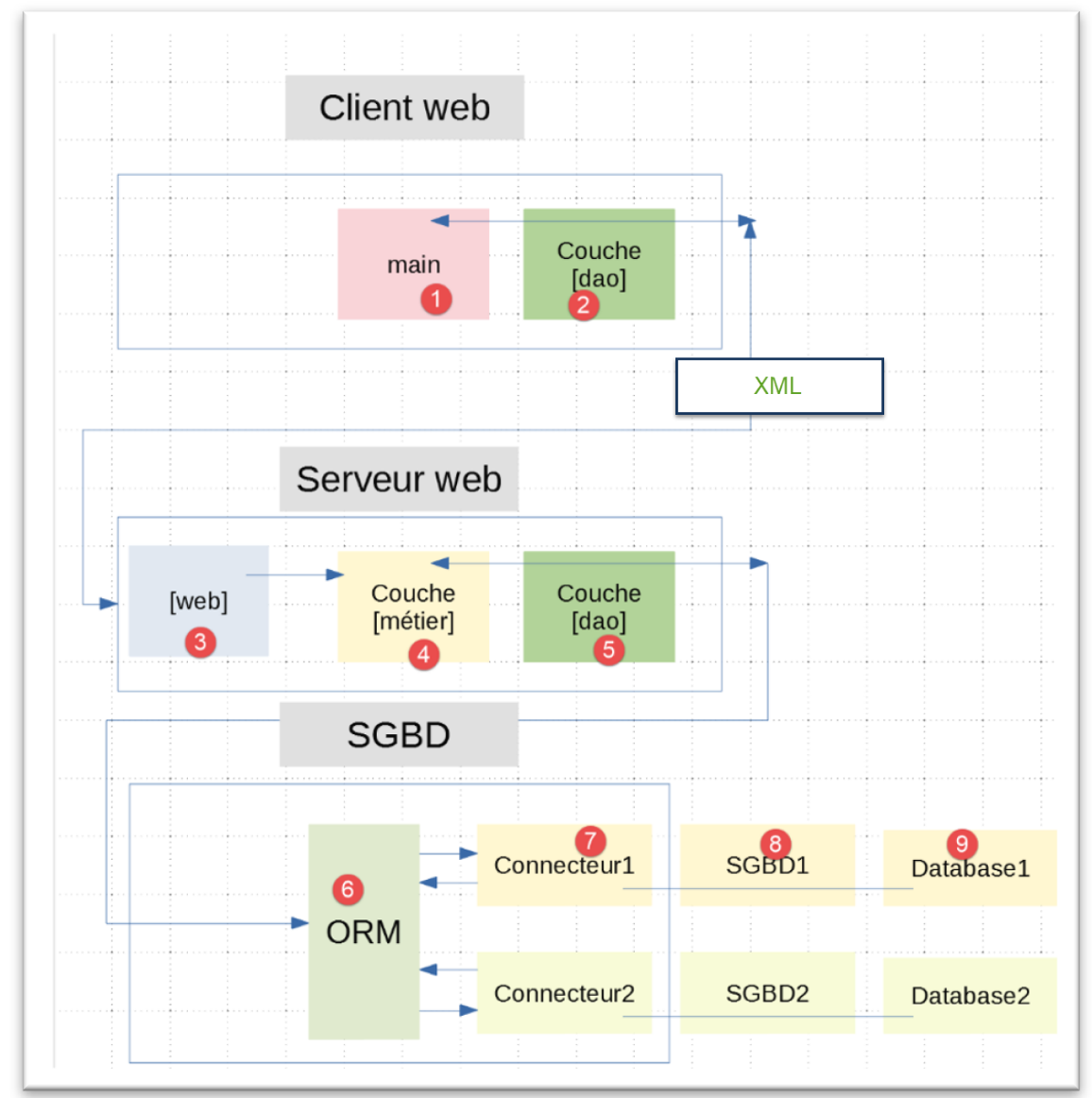
The architecture remains the same:
27.1. The web server
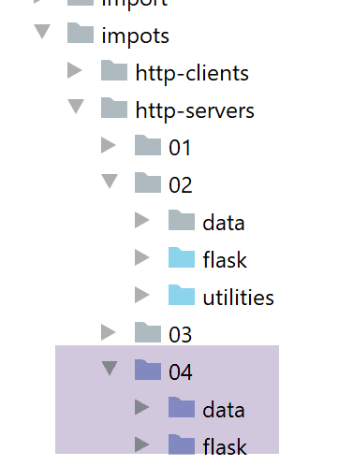
The [http-servers/04] folder is created by copying the [http-servers/02] folder, with the exception of the [utilities] subfolder. Then the following elements are changed:
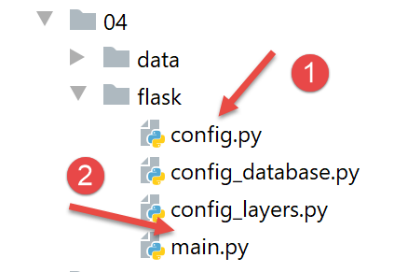
The file [config] is modified as follows:
    # absolute dependencies
    absolute_dependencies = [
        # project files
        # BaseEntity, MyException
        f"{root_dir}/classes/02/entities",
        # InterfaceImpôtsDao, InterfaceImpôtsMétier, InterfaceImpôtsUi
        f"{root_dir}/impots/v04/interfaces",
        # AbstractImpôtsdao, ImpôtsConsole, ImpôtsMétier
        f"{root_dir}/impots/v04/services",
        # ImpotsDaoWithAdminDataInDatabase
        f"{root_dir}/impots/v05/services",
        # AdminData, ImpôtsError, TaxPayer
        f"{root_dir}/impots/v04/entities",
        # Constants, slices
        f"{root_dir}/impots/v05/entities",
        # index_controller
        f"{root_dir}/impots/http-servers/01/controllers",
        # scripts [config_database, config_layers]
        script_dir,
        # Logger, SendAdminMail
        f"{root_dir}/impots/http-servers/02/utilities",
    ]
- line 21: specify the directory containing the utilities that remained in [http-servers/02];
The main script [main] changes as follows:
# Home URL
@app.route('/', methods=['GET'])
@auth.login_required
def index():
    logger = None
    try:
        # logger
        logger = Logger(config["logsFilename"])
        # we store it in a config associated with the thread
        thread_config = {"logger": logger}
        thread_name = threading.current_thread().name
        config[thread_name] = {"config": thread_config}
        # log the request
        logger.write(f"[index] requête : {request}\n")
        …
        # the request is executed by a controller
        résultat, status_code = index_controller.execute(request, config)
        # was there a fatal error?
        …
        # we log the answer
        logger.write(f"[index] {résultat}\n")
        # we send the answer
        return xml_response(résultat, status_code)
    except BaseException as erreur:
        # log the error if possible
        if logger:
            logger.write(f"[index] {erreur}")
        # we prepare the response to the customer
        résultat = {"réponse": {"erreurs": [f"{erreur}"]}}
        # we send the answer
        return xml_response(résultat, status.HTTP_500_INTERNAL_SERVER_ERROR)
    finally:
        # close the log file if it has been opened
        if logger:
            logger.close()
- The only change is on line 23: we now send a XML response;
The [xml_response] function is defined in the [myutils] module:
import xmltodict
…
def xml_response(résultat: dict, status_code: int) -> tuple:
    # result: the dictionary to be transformed into the XML string
    xmlString = xmltodict.unparse(résultat)
    # we return the answer HTTP
    response = make_response(xmlString)
    response.headers['Content-Type'] = 'application/xml; charset=utf-8'
    return response, status_code
- line 3: the [xml_response] function receives as parameters:
- the [résultat] dictionary to be converted to XML;
- the status code [status_code] to be returned to the web client;
- line 5: the [xmltodict] library is used to generate the string XML;
- line 8: use the header [Content-Type] to tell the client that we are sending XML;
The [xml_response] function must be imported into the [__init__.py] script:
from .myutils import set_syspath, json_response, decode_flask_session, xml_response
Then the [myutils] module must be incorporated into the machine-scope modules. This is done in a PyCharm terminal using the [pip install .] command (in the packages folder).
27.2. The web client
27.2.1. The code
The [http-clients/04] folder is obtained by copying the [http-clients/02] client. Then we modify the [ImpôtsDaoWithHttpClient] class as follows:
# imports

import requests
import xmltodict
from flask_api import status

from AbstractImpôtsDao import AbstractImpôtsDao
from AdminData import AdminData
from ImpôtsError import ImpôtsError
from InterfaceImpôtsMétier import InterfaceImpôtsMétier
from TaxPayer import TaxPayer


class ImpôtsDaoWithHttpClient(AbstractImpôtsDao, InterfaceImpôtsMétier):

    # manufacturer
    def __init__(self, config: dict):
        …

    # unused method
    def get_admindata(self) -> AdminData:
        pass

    # tAX CALCULATION
    def calculate_tax(self, taxpayer: TaxPayer, admindata: AdminData = None):
        ….
        # response status code HTTP
        status_code = response.status_code
        # we put the response XML in a dictionary
        résultat = xmltodict.parse(response.text[39:])
        # error if status code other than 200 OK
        ….
- line 30: the response HTTP [response] from the web server is now a string XML. The logs show its nature:
2020-07-27 15:53:47.886283, Thread-2 : <?xml version="1.0" encoding="utf-8"?>
<réponse><result><marié>non</marié><enfants>2</enfants><salaire>100000</salaire><impôt>19884</impôt><surcôte>4480</surcôte><taux>0.41</taux><décôte>0</décôte><réduction>0</réduction></result></réponse>
The string [<?xml version="1.0" encoding="utf-8"?>] is 38 characters long. Furthermore, if we examine the log file with a hex editor, we see that after this string there is a newline character \n. Then comes the response <response>…</response>. The string XML that we need to convert therefore begins after the first 39 characters of the string XML. It starts at character #39, with the first character numbered 0. This string is obtained by the expression [résultat["réponse"]].
If we run the client (follow the procedure from the previous examples), we get the same results in the file [résultats.json] as in the previous versions. The logs are as follows:
2020-07-27 16:21:14.015941, Thread-1 : début du thread [Thread-1] avec 2 contribuable(s)
2020-07-27 16:21:14.016940, Thread-1 : début du calcul de l'impôt de {"id": 1, "marié": "oui", "enfants": 2, "salaire": 55555}
2020-07-27 16:21:14.016940, Thread-2 : début du thread [Thread-2] avec 3 contribuable(s)
2020-07-27 16:21:14.018939, Thread-2 : début du calcul de l'impôt de {"id": 3, "marié": "oui", "enfants": 3, "salaire": 50000}
2020-07-27 16:21:14.019979, Thread-3 : début du thread [Thread-3] avec 3 contribuable(s)
2020-07-27 16:21:14.019979, Thread-3 : début du calcul de l'impôt de {"id": 6, "marié": "oui", "enfants": 3, "salaire": 100000}
2020-07-27 16:21:14.021938, Thread-4 : début du thread [Thread-4] avec 2 contribuable(s)
2020-07-27 16:21:14.021938, Thread-4 : début du calcul de l'impôt de {"id": 9, "marié": "oui", "enfants": 2, "salaire": 30000}
2020-07-27 16:21:14.021938, Thread-5 : début du thread [Thread-5] avec 1 contribuable(s)
2020-07-27 16:21:14.022939, Thread-5 : début du calcul de l'impôt de {"id": 11, "marié": "oui", "enfants": 3, "salaire": 200000}
2020-07-27 16:21:14.031942, Thread-1 : <?xml version="1.0" encoding="utf-8"?>
<réponse><result><marié>oui</marié><enfants>2</enfants><salaire>55555</salaire><impôt>2814</impôt><surcôte>0</surcôte><taux>0.14</taux><décôte>0</décôte><réduction>0</réduction></result></réponse>
2020-07-27 16:21:14.031942, Thread-1 : fin du calcul de l'impôt de {"id": 1, "marié": "oui", "enfants": 2, "salaire": 55555, "impôt": 2814, "surcôte": 0, "taux": 0.14, "décôte": 0, "réduction": 0}
2020-07-27 16:21:14.031942, Thread-1 : début du calcul de l'impôt de {"id": 2, "marié": "oui", "enfants": 2, "salaire": 50000}
2020-07-27 16:21:14.034941, Thread-4 : <?xml version="1.0" encoding="utf-8"?>
<réponse><result><marié>oui</marié><enfants>2</enfants><salaire>30000</salaire><impôt>0</impôt><surcôte>0</surcôte><taux>0.0</taux><décôte>0</décôte><réduction>0</réduction></result></réponse>
…
2020-07-27 16:21:17.055931, Thread-3 : fin du thread [Thread-3]
2020-07-27 16:21:17.059930, Thread-2 : <?xml version="1.0" encoding="utf-8"?>
<réponse><result><marié>non</marié><enfants>3</enfants><salaire>100000</salaire><impôt>16782</impôt><surcôte>7176</surcôte><taux>0.41</taux><décôte>0</décôte><réduction>0</réduction></result></réponse>
2020-07-27 16:21:17.060971, Thread-2 : fin du calcul de l'impôt de {"id": 5, "marié": "non", "enfants": 3, "salaire": 100000, "impôt": 16782, "surcôte": 7176, "taux": 0.41, "décôte": 0, "réduction": 0}
2020-07-27 16:21:17.060971, Thread-2 : fin du thread [Thread-2]
On the server side, the logs are as follows:
2020-07-27 16:32:04.983020, Thread-46 : [index] requête : <Request 'http://127.0.0.1:5000/?marié=oui&enfants=2&salaire=50000' [GET]>
2020-07-27 16:32:04.983020, Thread-46 : [index] mis en pause du thread pendant 1 seconde(s)
2020-07-27 16:32:04.984021, Thread-47 : [index] requête : <Request 'http://127.0.0.1:5000/?marié=oui&enfants=2&salaire=55555' [GET]>
2020-07-27 16:32:04.984021, Thread-47 : [index] mis en pause du thread pendant 1 seconde(s)
…
2020-07-27 16:32:07.001271, Thread-56 : [index] mis en pause du thread pendant 1 seconde(s)
2020-07-27 16:32:07.003078, Thread-54 : [index] {'réponse': {'result': {'marié': 'oui', 'enfants': 5, 'salaire': 100000, 'impôt': 4230, 'surcôte': 0, 'taux': 0.14, 'décôte': 0, 'réduction': 0}}}
2020-07-27 16:32:07.006078, Thread-55 : [index] {'réponse': {'result': {'marié': 'oui', 'enfants': 3, 'salaire': 200000, 'impôt': 42842, 'surcôte': 17283, 'taux': 0.41, 'décôte': 0, 'réduction': 0}}}
2020-07-27 16:32:08.002824, Thread-56 : [index] {'réponse': {'result': {'marié': 'non', 'enfants': 2, 'salaire': 100000, 'impôt': 19884, 'surcôte': 4480, 'taux': 0.41, 'décôte': 0, 'réduction': 0}}}
- The logger continues to write the response dictionary rather than the string XML that is sent to the client. This is not an error and is intentional;
27.2.2. Testing the client's [dao] layer
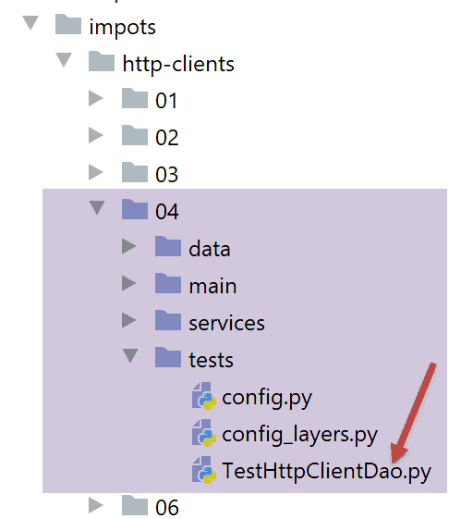
The test class [TestHttpClientDao] is the same as in |version 7| and yields the same results.