7. Regular Expressions
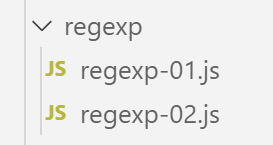
7.1. script [regex-01]
In the course PHP, we used the following code to illustrate the regular expressions from PHP 7:
<?php

// strict type for function parameters
declare (strict_types=1);

// regular expressions in php
// retrieve the various fields of a string
// the model: a sequence of numbers surrounded by any characters
// you only want to retrieve the sequence of digits
$modèle = "/(\d+)/";
// the chain is compared with the
compareModele2Chaine($modèle, "xyz1234abcd");
compareModele2Chaine($modèle, "12 34");
compareModele2Chaine($modèle, "abcd");

// the model: a sequence of numbers surrounded by any characters
// we want the sequence of numbers and the fields that follow and precede them
$modèle = "/^(.*?)(\d+)(.*?)$/";
// the chain is compared with the model
compareModele2Chaine($modèle, "xyz1234abcd");
compareModele2Chaine($modèle, "12 34");
compareModele2Chaine($modèle, "abcd");

// the template - a date in dd/mm/aa format
$modèle = "/^\s*(\d\d)\/(\d\d)\/(\d\d)\s*$/";
compareModele2Chaine($modèle, "10/05/97");
compareModele2Chaine($modèle, "  04/04/01  ");
compareModele2Chaine($modèle, "5/1/01");

// the model - a decimal number
$modèle = "/^\s*([+|-]?)\s*(\d+\.\d*|\.\d+|\d+)\s*/";
compareModele2Chaine($modèle, "187.8");
compareModele2Chaine($modèle, "-0.6");
compareModele2Chaine($modèle, "4");
compareModele2Chaine($modèle, ".6");
compareModele2Chaine($modèle, "4.");
compareModele2Chaine($modèle, " + 4");

// end
exit;

// --------------------------------------------------------------------------
function compareModele2Chaine(string $modèle, string $chaîne): void {
  // compares the $chaîne string with the $modèle model
  // the chain is compared with the model
  $champs = [];
  $correspond = preg_match($modèle, $chaîne, $champs);
  // displaying results
  print "\nRésultats($modèle,$chaîne)\n";
  if ($correspond) {
    for ($i = 0; $i < count($champs); $i++) {
      print "champs[$i]=$champs[$i]\n";
    }
  } else {
    print "La chaîne [$chaîne] ne correspond pas au modèle [$modèle]\n";
  }
}
We transpose this code into Javascript as follows:
'use strict';

/// regular expressions in javascript
// retrieve the various fields of a string
// the model: a sequence of numbers surrounded by any characters
// you only want to retrieve the sequence of digits
let modèle = /(\d+)/;
// the chain is compared with the model
compareModèleToChaîne(modèle, "xyz1234abcd");
compareModèleToChaîne(modèle, "12 34");
compareModèleToChaîne(modèle, "abcd");

// the model: a sequence of numbers surrounded by any characters
// we want the sequence of digits and the fields that follow and precede them
modèle = /^(.*?)(\d+)(.*?)$/;
// the chain is compared with the model
compareModèleToChaîne(modèle, "xyz1234abcd");
compareModèleToChaîne(modèle, "12 34");
compareModèleToChaîne(modèle, "abcd");

// the template - a date in dd/mm/aa format
modèle = /^\s*(\d\d)\/(\d\d)\/(\d\d)\s*$/;
compareModèleToChaîne(modèle, "10/05/97");
compareModèleToChaîne(modèle, "  04/04/01  ");
compareModèleToChaîne(modèle, "5/1/01");

// the model - a decimal number
modèle = /^\s*([+|-]?)\s*(\d+\.\d*|\.\d+|\d+)\s*$/;
compareModèleToChaîne(modèle, "187.8");
compareModèleToChaîne(modèle, "-0.6");
compareModèleToChaîne(modèle, "4");
compareModèleToChaîne(modèle, ".6");
compareModèleToChaîne(modèle, "4.");
compareModèleToChaîne(modèle, " + 4");

// --------------------------------------------------------------------------
function compareModèleToChaîne(modèle, chaîne) {
  // compares the string [string] with the model [model]
  console.log(`----------- chaîne=${chaîne}, modèle=${modèle}`)
  // the chain is compared with the
  const result1 = modèle.exec(chaîne);
  console.log(`comparaison avec exec=`, result1);
  // another way of doing things
  const result2 = chaîne.match(modèle);
  console.log(`comparaison avec match=`, result2);
}
Comments
- The codes PHP and Javascript are very similar to each other;
- Line 7: Note that in Javascript, the regular expression is not a string but an object. Do not place quotation marks or apostrophes around the expression;
- lines 41 and 44: there are two ways to achieve the same result;
Execution
[Running] C:\myprograms\laragon-lite\bin\nodejs\node-v10\node.exe -r esm "c:\Data\st-2019\dev\es6\javascript\regexp\regexp-01.js"
type d'a regular expression: object
----------- chain=xyz1234abcd, model=/(\d+)/
comparaison avec exec= [ '1234',
'1234',
index: 3,
input: 'xyz1234abcd',
groups: undefined ]
comparaison avec match= [ '1234',
'1234',
index: 3,
input: 'xyz1234abcd',
groups: undefined ]
----------- chain=12 34, model=/(\d+)/
comparaison avec exec= [ '12', '12', index: 0, input: '12 34', groups: undefined ]
comparaison avec match= [ '12', '12', index: 0, input: '12 34', groups: undefined ]
----------- chain=abcd, model=/(\d+)/
comparaison avec exec= null
comparaison avec match= null
----------- string=xyz1234abcd, model=/^(.*?)(\d+)(.*?)$/
comparaison avec exec= [ 'xyz1234abcd',
'xyz',
'1234',
'abcd',
index: 0,
input: 'xyz1234abcd',
groups: undefined ]
comparaison avec match= [ 'xyz1234abcd',
'xyz',
'1234',
'abcd',
index: 0,
input: 'xyz1234abcd',
groups: undefined ]
----------- string=12 34, model=/^(.*?)(\d+)(.*?)$/
comparaison avec exec= [ '12 34',
'',
'12',
' 34',
index: 0,
input: '12 34',
groups: undefined ]
comparaison avec match= [ '12 34',
'',
'12',
' 34',
index: 0,
input: '12 34',
groups: undefined ]
----------- string=abcd, model=/^(.*?)(\d+)(.*?)$/
comparaison avec exec= null
comparaison avec match= null
----------- chaîne=10/05/97, modèle=/^\s*(\d\d)\/(\d\d)\/(\d\d)\s*$/
comparaison avec exec= [ '10/05/97',
'10',
'05',
'97',
index: 0,
input: '10/05/97',
groups: undefined ]
comparaison avec match= [ '10/05/97',
'10',
'05',
'97',
index: 0,
input: '10/05/97',
groups: undefined ]
----------- chain= 04/04/01 , model=/^\s*(\d\d)\/(\d\d)\/(\d\d)\s*$/
comparaison avec exec= [ ' 04/04/01 ',
'04',
'04',
'01',
index: 0,
input: ' 04/04/01 ',
groups: undefined ]
comparaison avec match= [ ' 04/04/01 ',
'04',
'04',
'01',
index: 0,
input: ' 04/04/01 ',
groups: undefined ]
----------- chaîne=5/1/01, modèle=/^\s*(\d\d)\/(\d\d)\/(\d\d)\s*$/
comparaison avec exec= null
comparaison avec match= null
----------- chaîne=187.8, modèle=/^\s*([+|-]?)\s*(\d+\.\d*|\.\d+|\d+)\s*$/
comparaison avec exec= [ '187.8',
'',
'187.8',
index: 0,
input: '187.8',
groups: undefined ]
comparaison avec match= [ '187.8',
'',
'187.8',
index: 0,
input: '187.8',
groups: undefined ]
----------- chaîne=-0.6, modèle=/^\s*([+|-]?)\s*(\d+\.\d*|\.\d+|\d+)\s*$/
comparaison avec exec= [ '-0.6', '-', '0.6', index: 0, input: '-0.6', groups: undefined ]
comparaison avec match= [ '-0.6', '-', '0.6', index: 0, input: '-0.6', groups: undefined ]
----------- chaîne=4, modèle=/^\s*([+|-]?)\s*(\d+\.\d*|\.\d+|\d+)\s*$/
comparaison avec exec= [ '4', '', '4', index: 0, input: '4', groups: undefined ]
comparaison avec match= [ '4', '', '4', index: 0, input: '4', groups: undefined ]
----------- chaîne=.6, modèle=/^\s*([+|-]?)\s*(\d+\.\d*|\.\d+|\d+)\s*$/
comparaison avec exec= [ '.6', '', '.6', index: 0, input: '.6', groups: undefined ]
comparaison avec match= [ '.6', '', '.6', index: 0, input: '.6', groups: undefined ]
----------- chaîne=4., modèle=/^\s*([+|-]?)\s*(\d+\.\d*|\.\d+|\d+)\s*$/
comparaison avec exec= [ '4.', '', '4.', index: 0, input: '4.', groups: undefined ]
comparaison avec match= [ '4.', '', '4.', index: 0, input: '4.', groups: undefined ]
----------- chain= + 4, model=/^\s*([+|-]?)\s*(\d+\d*|\.\d+|\d+)\s*$/
comparaison avec exec= [ ' + 4', '+', '4', index: 0, input: ' + 4', groups: undefined ]
comparaison avec match= [ ' + 4', '+', '4', index: 0, input: ' + 4', groups: undefined ]
The methods [regexp.exec] and [string.match] return the same results:
- [null] if there are no matches between the string and its template;
- an array t, if there is a match with:
- t[0]: the string corresponding to the pattern;
- t[1]: the string matching the first parenthesis of the pattern;
- t[2]: the string corresponding to the second parenthesis of the template;
- …
- t[input]: the entire string in which the pattern was searched for;
7.2. script [regexp-02]
Sometimes you don’t want to extract elements from the tested string, but only want to know if it matches the pattern:
'use strict';

/// regular expressions in javascript
// retrieve the various fields of a string
// the model: a sequence of numbers surrounded by any characters
// you only want to retrieve the sequence of digits
let modèle = /\d+/;
console.log("type d'une expression régulière : ", typeof (modèle));
// the chain is compared with the model
compareModèleToChaîne(modèle, "xyz1234abcd");
compareModèleToChaîne(modèle, "12 34");
compareModèleToChaîne(modèle, "abcd");

// the model: a sequence of numbers surrounded by any characters
// we want the sequence of digits and the fields that follow and precede them
modèle = /^.*?\d+.*?$/;
// the chain is compared with the
compareModèleToChaîne(modèle, "xyz1234abcd");
compareModèleToChaîne(modèle, "12 34");
compareModèleToChaîne(modèle, "abcd");

// the template - a date in dd/mm/aa format
modèle = /^\s*\d\d\/\d\d\/\d\d\s*$/;
compareModèleToChaîne(modèle, "10/05/97");
compareModèleToChaîne(modèle, "  04/04/01  ");
compareModèleToChaîne(modèle, "5/1/01");

// the model - a decimal number
modèle = /^\s*[+|-]?\s*\d+\.\d*|\.\d+|\d+\s*$/;
compareModèleToChaîne(modèle, "187.8");
compareModèleToChaîne(modèle, "-0.6");
compareModèleToChaîne(modèle, "4");
compareModèleToChaîne(modèle, ".6");
compareModèleToChaîne(modèle, "4.");
compareModèleToChaîne(modèle, " + 4");

// --------------------------------------------------------------------------
function compareModèleToChaîne(modèle, chaîne) {
  // test
  const correspond = modèle.test(chaîne);
  // compares the string [string] with the model [model]
  console.log(`----------- chaîne=${chaîne}, modèle=${modèle}, correspond=${correspond}`);
}
Comments
- [regexp-02] reuses the code from [regexp-01] with the following differences:
- we do not want to extract elements from the tested string. Therefore, we have removed the parentheses from the regular expressions used;
- line 40: we use the [Regexp.test] method to determine whether a string matches a regular expression;
The results of the execution are as follows:
[Running] C:\myprograms\laragon-lite\bin\nodejs\node-v10\node.exe -r esm "c:\Data\st-2019\dev\es6\cours\regexp\regexp-02.js"
type d'a regular expression: object
----------- string=xyz1234abcd, model=/\d+/, match=true
----------- string=12 34, model=/\d+/, match=true
----------- string=abcd, model=/\d+/, match=false
----------- string=xyz1234abcd, model=/^.*?\d+.*?$/, match=true
----------- string=12 34, model=/^.*?\d+.*?$/, match=true
----------- string=abcd, model=/^.*?\d+.*?$/, match=false
----------- string=10/05/97, model=/^\s*\d\d\/\d\d\/\d\d\s*$/, match=true
----------- string= 04/04/01 , model=/^\s*\d\d\/\d\d\d\/\d\d\s*$/, match=true
----------- string=5/1/01, model=/^\s*\d\d\/\d\d\d\/\d\d\s*$/, match=false
----------- string=187.8, model=/^\s*[+|-]?\s*\d+\d*|\.\d+|\d+\s*$/, match=true
----------- string=-0.6, model=/^\s*[+|-]?\s*\d+\.\d*|\.\d+|\d+\s*$/, match=true
----------- string=4, pattern=/^\s*[+|-]?\s*\d+\d*|\d+|\d+\s*$/, match=true
----------- string=.6, pattern=/^\s*[+|-]?\s*\d+\d*|\d.\d+|\d+\s*$/, match=true
----------- string=4., pattern=/^\s*[+|-]?\s*\d+\d*|\d.\d+|\d+\s*$/, match=true
----------- string= + 4, model=/^\s*[+|-]?\s*\d+\d*|\d.\d+|\d+\s*$/, match=true

[Done] exited with code=0 in 0.269 seconds